2011/02/07

Early Russia: Thoughts on Christianity, Women and Language

As with any beginning country-state, there are many things that influence or change the way(s) it develops and grows through time. Early Russia is no different than any other country in this regard. What makes it different from many of the countries surrounding it was that its beginning could be influenced by different groups that did not exist a thousand years earlier... while many of the surrounding areas did and had been populated for thousands of years. Russia is a very different member of our modern European community in part because of its late start as a country; like a brilliant child, it is quickly catching up to its 'elders', but has had to continue to make the early steps of statehood that so many countries had made hundreds of years before early Russia existed. So Russia was able develop its own early traditions of Christianity and woman’s roles, somewhat separate from the traditions that had developed in other countries and had existed for generations. And Russia developed its own language apart from the language of other countries setting it apart in many ways from the lands that surrounded it. It is these particular influences on early Russia that I will discuss in this paper.

The early Russian people were devotees of pagan thought. An early document called The Primary Chronicle ascribes the beginning of Christianity in Russia to the Ruler Vladimir I in the year 988AD. Giving up as a bad job the attempt to strengthen paganism with his subjects, he looked at a few of the other world religions and chose Christianity... which he then began to 'invite' the elite and others in his country to join. The 'Chronicle' gives some hints as to why Christianity was chosen over other large faiths of that time and credits his rejection of Islam to 'circumcision and abstinence from pork and wine were disagreeable to him' and the idea that a religion that did not allow drinking would not be tolerated by his people. It has been suggested that Vladimir rejected Judaism on the grounds that as the Jews no longer had control of Jerusalem, this was evidence that they had been abandoned by God. While all of the former reasons may have been legitimate and true, they do not appear to be the only reasons for Vladimir's choice... and a strange choice it truly was for a man who had heard of Christianity several years earlier and remained a pagan, collecting hundreds of concubines, several wives and was known for a short time as a persecutor of believers of the Christian faith. (On a side note, Vladimir's grandmother had converted to Christianity in 957 and had missionaries sent to Kievan Rus with very little success.) Another reason- and might have been the most truthful or most compelling reason- was a reason that had clear political consequences and ties. As Europe was becoming more Christian, it might have occurred to Vladimir that his fortunes and commercial trade would be affected with other Christian nations. However, an easily documented reason may have had to do with forming alliances. Basil, the emperor of the neighboring Byzantine Empire asked his enemy Vladimir I for help in putting down a civil rebellion which was then given by Vladimir. The condition was that Vladimir could marry Basil's daughter if he (Vladimir) converted to Christianity. This would cement the alliance between the early Russian state and the Byzantine empire and would also open more trade routes and opportunities for economic advancement.
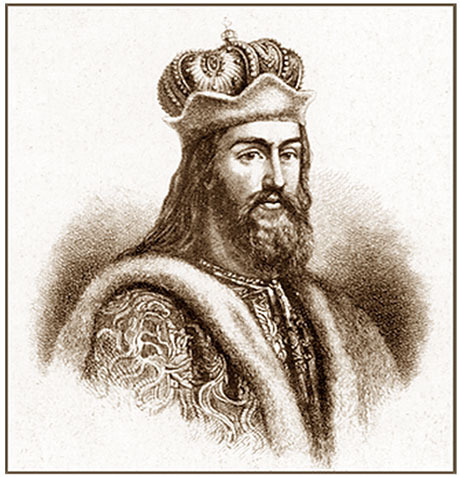
So, whatever the reason for the conversion of Vladimir I to Christianity, he took to it faithfully and appears to have made immediate and continued insistence of the spread and following of Christian membership and values throughout his lifetime. He tried to stamp out idols, invited beggars to the palace to be given food, drink and money if needed and had to be persuaded some churchmen to be more harsh with criminals as lawbreaking became rampant. He also championed the building of church buildings and education – although the children of the elite were the recipients of his education promotion. On his death, his body was dismembered and made into 'relics' for the church and he was eventually sainted by the Greek Orthodox Church.

Women in early Russia were seen in a slightly different light than the ways that women were seen in other European states at the time. While they were still very limited in their rights, women in early Russia did enjoy more protections and in some cases a greater status than their counterparts in Europe. Before Christianity was brought or 'forced' upon Russia, the majority of individuals living in the Kievan Rus believed in paganism. This belief system comes with deities of both sexes and both gods and goddesses were worshiped and treated with awe and fear. A few of the goddesses that would have been worshiped during this time would have been Paraskeva (who is associated with Mother Earth and her bounty), Mokosh (a fertility/childbirth goddess), Vesnianka (the personification of spring), Zorya Vechernyaya (the goddess of the setting sun.), Makosha (the goddess of fate and good/bad fortune), and numerous other powerful spirits such as the rusalki (known as water and tree nymphs). Women during these times could have known some fairly tough times. While goddesses were revered, earthly women could count on the likelihood of being raped, seized to force marital relations, and partners in polygamy. They would also be taught to understand that the husband is the head of the household and they were to be submissive. There are some instances that suggest that at least some noble women were not forced to marry against their will by their parents as well as a story in The Primary Chronicle about a 'forceful' princess who ruled for a short time. A pagan belief system in short allows for some better thoughts about women because it is polytheistic-unlike Christianity which is monotheistic and very much male-centric. To worship and revere nature was to revere a female goddess... and not a male. Christianity would bring some new rights for women, but would also take away some of the positive ways that women had been viewed.

So women in early Russia had changing roles over time and how women were viewed could change their status in society. In the pagan society, women could be treated physically quite roughly, but could enjoy a status of protection and even an elevation in status if her family had good fortune- class was not as rigidly enforced in these times. As the country became Christian, the church's views on women and sex became more dominant. Pious women were seen as good and the church encouraged the appropriate treatment of widows as well as treating the members of your family correctly, not forcing daughters to marry and opposed bride capture and polygamy. However, church legal procedures could be more punitive to women in some instances and the fear of women and their sexuality, charm, and ability to cause men to sin was a high focus of the church when women were discussed. The fact that women were prohibited from attending church due to menstruation or childbirth shows that the church did put unnecessary limits on women and feared them- marking them as 'unclean' during certain times... which is equated to sin. In Russian society outside of church, women were given rights in civil law- although those rights were many for the upper class. However, upper class women could inherit and own moveable property including her dowry, run or take care of her deceased husband's estate and her children could not refuse to give her the portion due to her from her husband's will. At first, a woman's movable property would consist of household items and personal effects, but would eventually come to encompass money and then land. And while women could own property, it had to be specifically given to them. Women could lost their property for the failings and debts of a husband, but the law was not interpreted in the same way for men. Church law in many cases superseded secular law and the church was responsible for matters of rape, adultery, divorce, witchcraft, etc...

Around Europe, Russian women were known for their beauty, knowledge and power. Russian upper class women and in some cases men were educated more often than their European counterparts. One example was the daughter of Yaroslav I named Anna who married the French King Henry I- at the wedding she could sign her name on the certificate, while the king himself could only sign an X. She later functioned as a regent for her son Philip I of France. Several of Anne's sisters married European Catholic monarchs as well. In the 900's the country was ruled by a woman named Olga, who is said to have avenged her husband's death and was also regent for her son for a few years - she is the Christian grandmother of Vladimir I mentioned above. She was also the first women to be canonized by the Orthodox Church. A wife of the “Grand Prince of Russia” could sometimes receive members of foreign embassies or ambassadors. So women did a fair share of the work that needed to be done, and upper class women brought influence, intrigue, and even scandal into many of the royal houses in Europe as well as Russia.

When Russia began to become a Christian nation under the rule of Vladimir I, written language was 'borrowed' from the same empire who brought Christianity. The Cyrillic alphabet was brought to Kievan Rus along with Christianity in the tenth and eleventh centuries by the followers of Saint Cyril and Saint Methodius, who invented the first Slavic alphabet in the ninth century. This alphabet was a written language that was close to the spoken language in the Rus lands and so by the time Christianity reached Kievan Rus, many books had already been translated into this handy and easier to learn language. This language became known as Old Church Slavic. The influence of Byzantine literature, culture and of course Christian works served to help move the church in quickly- all the documents and books were now in a common adopted language. The church also helped build schools for education and brought in a new culture/art that was fairly easily assimilated. Yaroslav I (also known as Yaroslav the wise and is the son of Vladimir I) helped facilitate this language and used it to write the first East Slavic written legal code called the 'Russkaya' Pravda.

The information that I was privileged to study while researching this paper did leave me with some questions that I have been unable to answer. For instance I am very curious as to what happened to the wives and concubines of Vladimir I. Very few sources that I was able to find alluded to the four wives before Anna (his wife from the alliance to the Byzantine empire) and their lives after Vladimir's conversion- they simply state that they were 'put away'. Another source suggests that the wives and the concubines were put away 'according to tradition'- doesn't say what that was however. One source shows the difficulty of even understanding who the mothers of Vladimir's children were. Nothing mentions these concubines and what happened to them. Were they not important enough to 'put away'? I wonder how many of these women found themselves in very hard times throughout the rest of their lives simply because Vladimir 'changed his mind'. I wonder how many of these women felt forced into becoming concubines... and were then forced out? Also, finding information on any women during this time frame was really difficult and I would be curious to know how women in towns lived vs. rural life and how their roles changed depending on the environment around them. I also would be interested to know what life was life for Anna of Kiev to be more educated than most individuals around her in the court in France. I can imagine that increased her power in some ways, but also might have made things quite difficult and she might have been 'left out' of things. Maybe someday I can have the time to continue to try and find answers to these questions that puzzle me. But until then, enjoy the read :).

2011/02/06

The Earliest Beginnings of a Modern Russia

In modern times, Russia is the largest country in the world with over six million square miles of land. It is the ninth most populous nation in the world today with 142 million people, shares borders with more countries than any other existing in the world and has the world's largest reserves of mineral/energy and forest resources. Over its centuries of history, the boundaries of land and the people that we call Russian today have changed a great deal. This paper will discuss who the earliest known inhabitants were of this land was well as migration and the areas they settled in which include the modern cities of Novgorod and Kiev.

The focal point of the earliest Russian culture was centered around Slavic tribal kingdoms that populated several areas (along with a few other groups of people that were assimilated into the Slavic tribes) in and around the areas of Novgorod and Kiev. One source describes how goods would be brought by boat west towards Russia through the Caspian Sea and up the Volga river to the place where Novgorod was built and stands today. These lands were populated by the formerly discussed groups whose earliest members formed tribes and then cities- joining together into a unique state which is known as Kievan Rus... and is the starting point for three current Slavic nations- Russia, Ukraine and Belarus In the state of Kievan Rus, many individuals settled in the areas they called Novgorod and Kiev and then continued to spread out to other surrounding areas. (These two cities retain these names today) Both cities existed before the formation of the state Kievan Rus was officially formed in 880 by Prince Oleg who chose the city of Kiev as his capital city. In fact the city of Kiev 'celebrated' its 1500th anniversary in 1982- that must be a pretty interesting place to see the many layers of history in its many streets and buildings.

One attraction to the city of Kiev is its location. The many nearby rivers and waterways made Kiev an excellent place for travel and trade and this town was able to become the center of a trade route between Constantinople and Scandinavia. The Dnieper River runs right through the town and within the modern limits of the city of Kiev, there are over 400 bodies of open water including rivers, tributaries, lakes, etc... Novgorod also had excellent access to the Oka and Volga rivers. Once described as the bridge between the European lands and the Asian lands which probably also helped it prosper as a trading partner or trade route. Novgorod also has the distinction of being able to reach several large bodies of water such as seas for trading with other nations- these are the Baltic, Black, Caspian and White Sea as well as the Sea of Azov. Both places have a short window/climate for growing crops and other forms of agriculture... and both places had large resources of forests for wood which would have helped with boat building, buildings and even material for trade... such as for food! It certainly is a testament to the longevity and the resources surrounding these cities that they are still there and are habitable (still growing today!)- even when they were destroyed in time of war they were rebuilt right over the destroyed city.

There were many excellent reasons for migration early in Russia's history. The land itself is located in the northern most reaches of the globe and reaches across several time zones. Winters are generally longer than in other countries with a more southern base and summers are equally short. The land or geography of Russia is generally flat with few mountains so expansion was easy... add the waterways and travel/migration was even easier. Both the cities of Kiev and Novgorod were probably built by their first inhabitants because they did have more options for trade, living, travel, etc... than some of the surrounding areas. These areas, because of the great capacity for moving people and goods quickly, would have been very powerful cities- commercially strong and politically sensitive and valuable. Having control of the land around these rivers as well as the waterway itself would shape much of Russia's history over the last several centuries. These areas also had large resources of building materials with the huge forests which could also have been used to build tools, boats or ships, houses or even heat. Other resources that were available were plenty of 'fur' animals, and access to warm water ports (a few mentioned above). I suspect, and admit that this is a guess from the different readings, but the climate in these two cities would have been moderated by the lowlands and the large amounts of water... whereas other areas in Russia may not have had or do have such a 'nice' climate.

Before this class, I have known only a few tiny tidbits about Russia and most of them are 'famous' tidbits. I had heard of Lenin and Stalin and not much very flattering about either of them. I had also heard of Gorbachev and and the 'collapse' and of Putin and his successor- I have become a current news reader over the last decade. I will admit that I do not have much of an opinion either way of Putin or Mendeleev mainly because I do not trust our newspapers to tell me an unbiased account. The only other tidbit that I have a bit of knowledge on is the most obvious- Nicolas I and Alexandra and their children... and can't forget Rasputin! I signed up for a class on Russian history for a few reasons. One is that I doubt that Russia is nearly as romantic as it seems in my mind... or as foreign. I also am not impressed with the idea that I have been studying history for years and feel as if I was weaned on it, but know almost nothing about Russia or China. And I think I would like to become more well rounded in that regard. Thank you for the opportunity!

2011/02/03

Today...

1. I did a good deed and helped feed over 300 people.
2. I shared a hug and a birthday wish with a friend.
3. I finished some history homework and I am almost caught up from being sick.
4. I only almost cried once.
5. I shared a nice moment this evening looking at the stars with my husband... and we move forward..?
6. I made Val laugh- a herculean task!
7. I had a good dinner with a surprise dessert from my husband- g/f blueberry pie :)
8. I am warm, safe and not feeling too stressed.
9. I am truly blessed to have such good family, good friends, and the strength to deal with my challenges.
10. I know longer think of my challenges and secrets every second of the day and can find joy... at least it is becoming easier.
Today... was a great day!

2011/02/02

Comparing Society and Culture... to a Tootsie Pop!


So my teacher gave me a fun assignment that I thought I would post here and see what other people thought. The first paragraph will contain the definitions of society, culture and personality/the individual. The next is the fun part! :)

This one is tough to really work out in my head and explain- at least satisfactorily to me! Society refers to the idea that we live among other people who have some forms of power to permit us to do some things and stop us from doing others. Culture is defined as the intellectual influences that enable us to see some possible avenues of behavior and refuse to do or see other ideas... and personality is the individual response to the cultural and societal influences around us and how we individually interpret these avenues and expectations and conduct ourselves accordingly- or not based on our own decision making, learned or innate cues, etc... These three terms (society, culture and personality) describe separate ideas that in some ways can be teased out separately from the other two terms. Yet, like triplets, while they are separate entities, each of these terms describes ideas and behavior that are interwoven together and so... they cannot totally be separated except on a vague and less informative basis. Society and culture can help define people and even how they see themselves, but personality can change and mold culture... which can change society. Or personalities can change social 'expectations' and in doing so change the larger picture of culture and society. So each of these ideas clash and mesh depending on different factors.

OK- know for the fun!

I first have to admit... that I didn't do the tootsie pop or blow pop eating exercise. I know of very little candy that is gluten free so I didn't even think of risking it. But... I will give it a shot! I must also admit that the most jarring and significant quote from this week's reading was in chapter four and was 'statistics don't bleed'. Gosh, how true is that! Only emotions- whether positive or negative can truly convey the feelings behind statistics. Truly, a number is nothing much by itself toward understanding.

But back to the tootsie pop. The outer candy shell would remind me of culture and society. The color and flavor would stand for culture and the sugar and sweetness would stand for society. When just glanced over, there almost doesn't appear to be a difference between the two and when licked, you might only separate them slightly. The flavor of strawberry might be separate in your mind from the 'sweet'- only if you are mindfully licking of course. :) This candy shell is thick and you might be very tempted to just eat the shell and throw the middle... or the individual away. Also, you can buy many different colors or cultures and so flavors and levels of sweetness may vary. But while the individual tastes different and looks different... it adds the best perspective on the lollipop or culture itself. For the culture and society can change, but the variety and diversity of the individual remains the same- high quality, long lasting and memorable. But neither the culture or the society would be interesting without each other. The flavor of culture is bitter without sugar... and the sweetness of society is frankly boring without diversity. The individual brings out the flavor and sweetness of the culture/society... and makes it worth living in. Also , as the individual is different it is flexible... in ways that society and culture may not be. Only through the flexibility of the middle or the individual... can the culture or society change.


It is so important to understand how these groups or ideas work together to present a complex picture of diversity, beauty and tastiness that give us a true picture and understanding of the whole- which raises the value and importance of the information to us. Otherwise, we might be tempted to ignore or not 'eat' the information as we will be ignorant of the joys and knowledge that can be found in the patient lick, lick, lick of information to get us to the most knowledgeable and interesting core.


So what do you think? Would you describe it differently? How so... and do you agree with my analogy or to simplistic. Be creative and have fun!

2011/01/23

Questions and Thoughts on Oral History and Tradition


This semester I am studying Oral History and will be doing an hour long interview. I thought I would post these questions. I had a lot more but I think these particular ones cover the basics of what Oral History is, oral tradition and how it is used, and how these forms of history can be beneficial. I need to decide on a topic for my class and I am thinking of interviewing a Catholic nun... After reading this post, does anyone else have any suggestions that they would be interested in? I was very fascinated with some of the differences and information I learned. Hope you find something interesting and new in this post as well. :)


1. What does the study of History teach us?: The study of history can teach us how to look through the eyes of another human being and what life and culture were like for them. History fores us to look at the world and life differently than how we live it- even when studying the history of someone who lives next door or in the same family. We can learn why people did they things that they did...sometimes through journals and letters where we can 'see' what they were thinking and what thinking went into those decisions and how they changed the life of everyone involved. This study can teach us to become more introspective about ourselves and how we make decisions and to question why we do what we do in our lives. The study of history also teaches us about basic human traits and humanity itself. We are forced to face our fears, prejudice and other ways of thinking when studying history and we are also forced to think about our role in the history that is being made today that we call our life. It can also teach us how to live in our contemporary society in an intelligent and informed matter. Being able to understand or at least show tolerance to the actions of ourselves and those around us keeps life more interesting, safer, useful... and beautiful!

2. What is oral history?:
Oral History is almost the most personal of all ways to collect historical facts and research. Oral history is the research, preparation and collecting of facts, observations, recollections, etc... of knowledge from another human being. Oral history can not be gotten by reading a dusty ledger or sitting quietly in a dark library. Oral history tests you as a historian and as a human. To collect information, you must be personable, able to engage with others, able to listen and not steer the conversation in different directions or toward your own biases. You must be able to act sympathetic-even when you personally are not- and help people to share honestly what is in their memories and also be able to assess the information and the individual sharing it. Oral history is a little different than oral tradition and oral history can be more useful for the society that is generally mostly literate. One reason for this is that the people in these societies are less likely to use their memories to hold 'things' long term... as they could be written down or recorded. The focus of this class will be on the “collecting of an individuals spoken memories of his life, of people he has known, and events he has witnesses or participated in”.

3. What are the common types of historical sources?:
The most common sources for historical information can be easily classified into groups. The grouping of written documents can include, but are not limited to- journals or diaries, books or other published works such as newspapers, letters, and governmental records such as census forms, applications, and tax records. Other examples can be land or property deeds, ledgers and/or records kept by groups such as churches, non profits, small informal groups, etc... Another group would be 'visual documents' and would include pictures, portraits,and prints that-while they may contain no writing- can tell us a lot about the subjects and environment/culture at the time they were created. The grouping of physical documents can encompass almost anything that hasn't already been covered...such as coins, clothing, tools, furniture, buildings, art, music, etc...

4. What is oral tradition? What role does it play in literate and illiterate societies?: Oral tradition is a story, tradition or practice that is shared orally or through speech- usually handed down from generation to generation. Oral tradition is usually eventually written down, but can tell us so much about the society and the people who originated them and allows history to be kept and shared by groups who do or did not have writing. It was a good way to keep valuable information for others in your group and would allow the literate and the illiterate alike to share the information. One downside of written documents is that they are only as useful as the person attempting to read them. If there is no one who can read the document... then the information is just as unavailable and gone as if we didn't have the documentation in the first place. (Sometimes you can get lucky and discover how to read the documents so they shouldn't be discarded- the Rosetta Stone is an example.) Oral tradition can cover such 'documents' as speeches, songs, interviews, and conversations. Oral history, especially if shared by a quite charismatic speaker, can evoke emotions, memories and actions that the written words is hard pressed to match. And again, the spoken word is available to all who know the language- whereas written documents have an added impediment. Spoken word, as shared with more people and preserved by memory is more accessible to everyone -anyone in hearing distance. Other documents can easily be destroyed- a book can be burned, etc... But to destroy a memory, you must destroy all who have the memory before they can spread it... and like destroying a trail a gossip, it is a horribly impossible thing to do! :) So societies that have no way to write it... or will be punished for writing it down.. would carefully remember these 'documents' so that they could still be shared.

5. What is the difference between oral history and personal observation?:
Oral history is something that is told to a person-usually a person that has very little experience with what is being discussed. One purpose of oral history is to share something with someone who doesn't have that experience. Personal observation is experience. While people can tell you their experience, you as the historian will also be colored by your view of the experience and merging the perspectives will be more difficult if not impossible. The best way for me to understand this is by looking at the difference between the words sympathy and empathy. A person can have sympathy and some understanding of an experience, but because they have not experienced it, they cannot have the depth of knowledge of one who has personally experienced it. So a woman who has lost a child has a much better understanding of a different woman’s situation when she has lost a child and can have empathy, but a woman who has never had a child cannot not truly understand what that other person has gone through- no matter how many times it is explained. There will always be missing pieces... sort of like the concept of history in general. :)

6. Why is oral history especially important in this age of communication revolution?: People in this communication age are far less likely to keep written documents such as journals. Facebook allows you to store and save your status updates now, but that doesn't tell you what was said in conversations or really what you were thinking when you wrote that tiny jot of information. And once we forget the information... it is gone. People used to write letters and mail them- now we write emails and delete them... or we save time and talk on the phone. I think we also spend less time with people these days and so sharing with people is less of a priority. We divide ourselves off and just are not big parts of our communities as we once were. We are not as intimate with a large amount of people and our circle of trust grows ever smaller. However, this rationale may only apply to the 'common man' as the more well off and famous are very likely to have volunteers to collect and categorize the person's written documentation. These documents may be less revealing than the past and certainly may not always be the most truthful or unbiased, but these documents should help to flesh in a picture that we would not have had without them.

7. What is the relationship between written records and oral history?: I think the easiest way to discuss these two topic is to start by saying that by themselves they are useful and I do not want to suggest that alone they are not useful documents with which to discuss and research a topic- but only together does the most complete picture of that slice of history able to be discovered. Memory is a fragile substance and when someone tries very hard to be the most accurate because there will be no written record, memory appears to be the most valuable and 'solid'. But without that intense effort memory is a fluid object that can change based on perceptions of the event, passage of time, etc... Oral history can give us insight into new ways to determine written documents as well as a way of verification. When there are discrepancies, that can help open the mind to ideas of new research.

8. What is the greatest advantage of oral history over written records? What are some of the drawbacks of oral history?: The greatest advantage of oral history is that the historian gets to participate so the historian can actively ask for what information they want. Everyone wants to know if Richard III 'did it', but we can't actually ask can we? :) So if the researcher take the time to look into the desired subject, the interview can be filled with questions that potentially bring forth greater meaning and understanding into the subject matter. Sort of an efficient way of getting to the knowledge that you seek! Having questions that have been thought of and determined as useful can have some biases but can also preserve information that would otherwise have been lost... and may very well be useful to future historians. Oral history sometimes is a way to preserve stories and history that would otherwise be lost entirely as some cultures are biases against actively recording your own history. Oral history is also biased in its openness- you do not have to be rich and famous to apply and so it can provide an every-man’s perspective. It can also explain the 'why' behind a person's actions whereas sometimes written documentation is very much caught up in the 'how'. Also, oral history with several slightly different tellings of the same event can also give us clarity into the situation - some constants throughout the stories will make parts of the tale clear. However, some drawbacks are that written documentation for the 'everyman' will probably be lacking- it is important to remember that oral and written history compliment each other. Oral history is also dependent on memory which can have flaws and can be colored by perspective and bias. That said, almost all historical sources have flaws and so knowing the flaws allows us to use the source to its best advantage and your the most valuable use.

9. What is the importance of research in oral history?: Oral history is a great form of documentation, but it needs to be used if at all possible as a complimentary form of documentation. No form of history can be truly accurate if there is nothing to compare it too... what I mean is there is no way to show how accurate it is. So all history should be validated through other sources and oral history is not immune from this rule. Oral history is also very likely to have 'gaps' of information that can be filled in with written documents and other sources. Research before the oral interview is extremely important as well, because it helps you to know what you need to ask; i.e. what answers you already have, what is missing, what is not clearly understood, etc... Otherwise you can have a interview that is full of already know facts and to find to more... you have to do another interview. A little bit of a waste of everyone's time really.

10. What is meant by the phrase “historical significance”?
Why is it important?: Historical significance basically means that there is an meaning or message to the information that is important to that time in history. So you need to ask yourself some questions about a topic to decide if it has historical significance... such as was this information important at the time and does it continue to be important today? How was this information used at the time and changed or not changed over the following years and generations. Did this facts/actions change things that followed in time and place. The term 'historical significance' also is a term in which what information is important depends on what the questions are that are being asked and how the questions and the answerer 'fit' into their cultural, political, local landscape,etc...!

11. What questions/issues should you consider as you decide what topic to research?: One important question (to me) is what topic would I find myself interested in pursuing... or would really find fascinating? No matter how important and needful the information is, if the historian has no real interest or enthusiasm for collecting the information it can effect the results in ways that may not easily be seen or detected. Another question I should ask is how will my interview contribute to the knowledge and information already known- or what will my work be adding to the already collected data.

Hope you enjoyed this!